Review basis: Research-led; not hands-on. TestedHarbor has not road-tested these five cameras. We compared current US specifications with attributed testing from specialist and established editorial sources. Recommendations are based on use-case fit, not a fabricated test score.
The VIOFO A329S 2CH is our best overall research pick for drivers who want high-detail front-and-rear recording. The Vantrue E1 Pro is the compact 4K value choice, the Vantrue N4 Pro is better suited to rideshare cabin coverage, the Thinkware U3000 Pro is the parking-first option, and the Garmin Mini 3 is the discreet front-only pick.
Those choices solve different problems. Decide how many views you need and how the camera will stay powered while parked before comparing resolution, app features, or headline specifications.
Which dash cam should you buy?
| Pick | Best for | Why it stands out | Main tradeoff |
|---|---|---|---|
| VIOFO A329S 2CH | Best overall | 4K/60 front recording plus a 2K rear camera | Premium price; parking needs extra power hardware |
| Vantrue E1 Pro | Compact 4K value | Small front camera with 4K recording and high-capacity card support | No rear or cabin view in the base setup |
| Vantrue N4 Pro | Rideshare and cabin coverage | Front, infrared cabin, and rear recording in one system | More wiring and installation work |
| Thinkware U3000 Pro 2CH | Parking protection | Radar-assisted parking features with 4K front and 2K rear recording | High cost and power-accessory requirements |
| Garmin Dash Cam Mini 3 | Smallest simple setup | Tiny 1080p front camera with a built-in polarizer | No screen or built-in GPS |
How did we select these dash cams?
We first separated the search intent into five jobs: detailed two-channel evidence, compact front recording, rideshare cabin context, parked-car monitoring, and discreet installation. We then checked official manuals and product pages for channel resolution, storage limits, power requirements, and included hardware.
Independent evidence carries more weight for footage quality and day-to-day usability. Car and Driver and Vortex Radar currently place the VIOFO A329S among their leading tested choices, while separate reviews inform the tradeoffs for the Vantrue N4 Pro, Thinkware U3000 Pro, and Garmin Mini 3. Specifications below are not presented as TestedHarbor measurements.
Best overall
VIOFO A329S 2CH
Choose the VIOFO A329S 2CH if front-and-rear detail is the priority and you are willing to pay for it. Its official specification combines 4K/60 fps front recording with a 2K rear camera; HDR on the front camera operates at 4K/30 fps.
Car and Driver selected the A329S as its best overall dash cam after evaluating footage and usability, while Vortex Radar also identifies it as its leading all-around choice. Those are independent conclusions under their own methods, not results reproduced by TestedHarbor.
The high front frame rate can be useful for fast-moving daytime scenes, but 4K/60 should not be confused with guaranteed plate capture. Night exposure, relative speed, angle, windshield reflections, and headlights still affect what a frame preserves.
Who should skip it?
Skip it if you only need basic incident recording, want cabin video, or do not want to route a rear-camera cable. Parking recording also requires compatible continuous power hardware rather than the standard ignition-switched setup alone.
Best compact 4K value
Vantrue E1 Pro
Choose the Vantrue E1 Pro when you want a small 4K front camera without paying for channels you will not use. Vantrue lists a Sony STARVIS 2 front sensor, 5 GHz Wi-Fi, GPS, and support for cards up to 1TB.
Car and Driver names the E1 Pro its tested value pick. Its small body is easier to position behind a mirror than a larger multi-camera display unit, but the base camera does not document what happened behind the vehicle or inside the cabin.
The E1 Pro makes the most sense for commuters who want a compact front view and are comfortable using a phone for clip management. Confirm the current package contents, memory card, and parking-power accessory because retailer bundles can differ.
Who should skip it?
Skip it if rear-end collisions, parking-lot activity behind the vehicle, or rideshare cabin disputes are central concerns. A two- or three-channel system is a better match for those jobs.
Best for rideshare
Vantrue N4 Pro
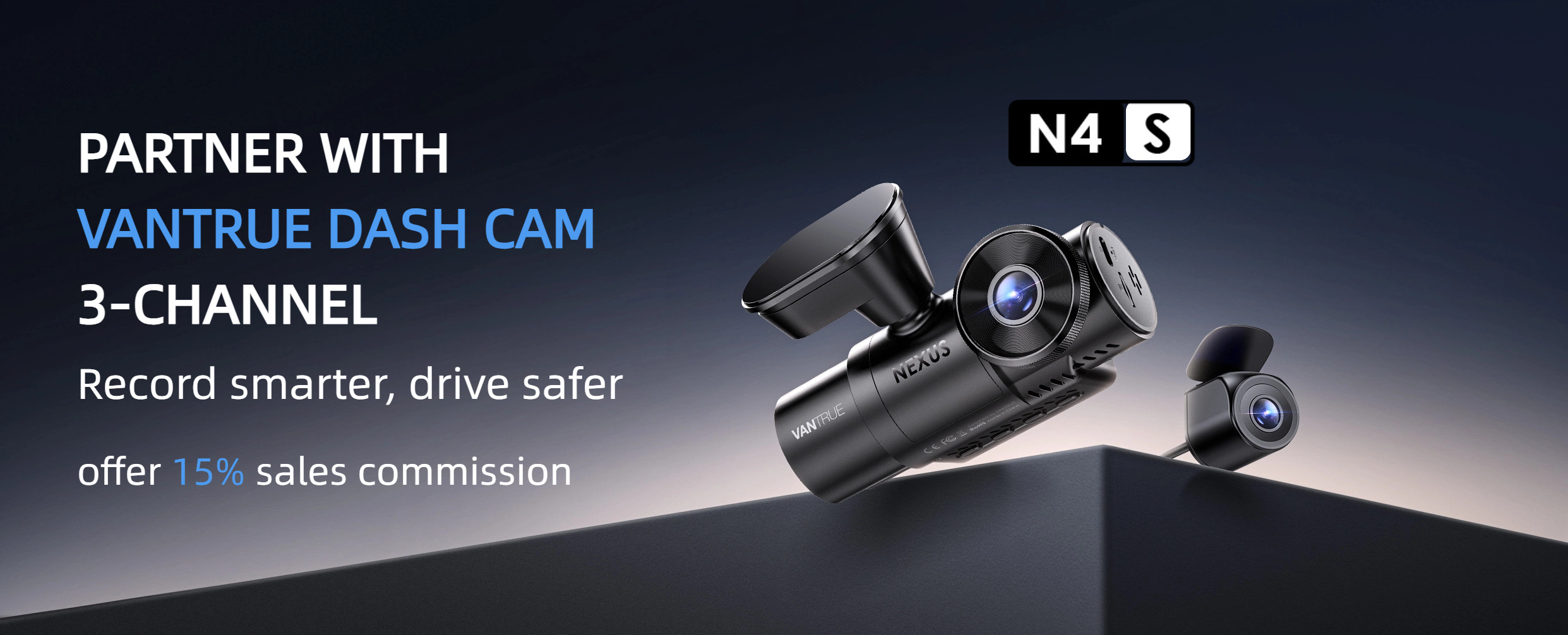
Choose the Vantrue N4 Pro when cabin evidence matters as much as the road ahead. It records 4K front, 1080p infrared cabin, and 1080p rear video at the same time, making its strongest case for Uber, Lyft, taxi, delivery, and shared family vehicles.
Tom's Guide reported clear well-lit footage and reliable operation during a two-week review, but also noted windshield reflections without the optional polarizing filter and the time required to hide three-camera wiring. That captures the core tradeoff: broader context requires a more involved installation.
Vantrue states that parking mode requires constant power through compatible hardware and supports cards up to 1TB. The hardwire kit and memory card should be treated as part of the total setup cost, not optional details discovered after purchase.
Who should skip it?
Skip it if you do not want cabin recording, cannot route the rear cable cleanly, or prefer the higher-resolution rear camera and external rear-camera design of the newer N4 Pro S.
Read our full Vantrue N4 Pro research review or compare Vantrue setups by driving scenario.
Best for parking protection
Thinkware U3000 Pro 2CH
Choose the Thinkware U3000 Pro when parked-car monitoring is the main reason you are buying a dash cam. Thinkware combines 4K front and 2K rear recording with radar-assisted parking features designed to reduce standby power use.
The U3000 Pro is a specialist choice, not the default recommendation. Its parking features require the correct OBD or hardwire power setup, and optional connected features can add hardware or subscription cost. TechRadar's review found substantial capability but questioned its value against less expensive rivals.
Before buying, confirm whether the selected package includes the rear camera, power cable, memory card, and any LTE accessory you expect. Similar product names can hide materially different bundles.
Who should skip it?
Skip it if parking mode is occasional rather than central, or if you want a screen on the camera. A less expensive two-channel model may cover ordinary driving evidence without the premium parking hardware.
Best discreet front-only camera
Garmin Dash Cam Mini 3
Choose the Garmin Mini 3 when a camera you barely notice is more valuable than maximum resolution or multi-camera coverage. Garmin lists 1080p recording, a 140-degree view, and a built-in polarizing filter in a body designed to sit behind the mirror.
Tom's Guide reported that the Mini 3 remained unobtrusive during two weeks of use, while TechRadar also highlighted the compact design. The compromise is clear: there is no screen or built-in GPS, and 1080p leaves less room for cropping than 4K footage.
Parking Guard requires a compatible constant-power accessory and Wi-Fi connection features depend on the rest of the setup. Buy it for simple front evidence and low visual clutter, not as a full perimeter-monitoring system.
Who should skip it?
Skip it if you need rear coverage, location data built into the camera, or the extra detail available from a strong 4K system.
How do the five picks compare?
| Model | Channels | Published recording format | Best reason to buy |
|---|---|---|---|
| VIOFO A329S 2CH | Front + rear | 4K/60 front + 2K/30 rear | High-detail two-channel recording |
| Vantrue E1 Pro | Front | 4K front | Compact 4K value |
| Vantrue N4 Pro | Front + cabin + rear | 4K + 1080p + 1080p | Rideshare cabin context |
| Thinkware U3000 Pro 2CH | Front + rear | 4K front + 2K rear | Parking-first system |
| Garmin Mini 3 | Front | 1080p front | Discreet installation |
Published formats come from manufacturer product pages and manuals. They do not represent a single controlled TestedHarbor comparison, and recording modes may change when HDR or multiple channels are enabled.
What does parking mode actually require?
Parking mode is a power-system decision before it is a camera feature. Most 12-volt sockets turn off with the ignition, so the camera needs a compatible hardwire kit, OBD cable, always-on cable, or external dash-cam battery to continue monitoring.
- Confirm the power accessory: The camera and cable must support the same parking modes.
- Use low-voltage protection: A properly configured cutoff helps reduce the risk of draining the starter battery.
- Check recording behavior: Buffered event, impact-only, time-lapse, and radar-assisted modes capture different evidence.
- Budget for installation: Three-channel cable routing and fuse-box hardwiring can justify professional installation.
How should you choose storage and manage reliability?
Use a high-endurance microSD card that appears within the camera maker's supported capacity. Multi-channel 4K recording writes far more data than a single 1080p stream, so card quality and overwrite behavior matter more than buying the largest unverified card.
Format the card through the camera or app as directed, review a sample clip after installation, and periodically confirm that date, time, GPS, audio, and every camera channel are recording. A dash cam that powers on is not necessarily saving usable files.
What legal and privacy checks matter in the US?
Mounting and audio-recording rules vary by state. Keep the camera outside the driver's critical sightline, check local windshield-obstruction rules, and review consent requirements before recording cabin audio or passengers. Rideshare drivers should also check platform policy and consider visible notice. This is a practical checklist, not legal advice.
Sources and evidence
- Car and Driver: tested dash cam comparison
- Vortex Radar: best dash cams and test methodology
- VIOFO A329S 2CH official specifications
- Vantrue E1 Pro official specifications
- Vantrue N4 Pro official specifications and Tom's Guide independent review
- Thinkware U3000 Pro official specifications and TechRadar independent review
- Garmin Dash Cam Mini 3 official specifications, Tom's Guide review, and TechRadar review
Sources were checked on July 31, 2026. Manufacturer pages support specifications and compatibility; independent reviews support attributed observations only.
Frequently asked questions
What is the best dash cam for most US drivers?
The VIOFO A329S 2CH is our research pick for most drivers who want strong front-and-rear recording and can accept a premium price. Drivers prioritizing compact size, cabin coverage, or parked-car monitoring should choose a model built around that need instead of treating one camera as universally best.
Is a 4K dash cam worth it?
A 4K front camera can preserve more daytime detail, but resolution alone does not guarantee readable license plates. Sensor quality, HDR tuning, exposure, windshield reflections, motion, and lighting also matter. Compare attributed footage tests rather than buying from the 4K label alone.
Should I buy a front-only, two-channel, or three-channel dash cam?
Choose front-only for the simplest installation, front-and-rear for broader collision coverage, and three-channel when cabin context matters for rideshare or family use. Every additional camera adds wiring, storage demand, and installation work.
Does dash cam parking mode work without a hardwire kit?
Usually not for continuous unattended protection. Many dash cams need a compatible hardwire kit, OBD cable, always-on cable, or external battery to keep parking mode active after the ignition turns off. Check the exact power accessory and low-voltage protection requirements before buying.
How much microSD storage does a dash cam need?
Storage needs depend on resolution, channel count, bitrate, and driving time. A multi-channel 4K system fills a card faster than a 1080p front camera. Use a high-endurance card within the manufacturer's supported capacity and format it on the schedule recommended in the manual.
Need front, cabin, and rear coverage?
The Vantrue N4 Pro is the most relevant pick here for rideshare and interior context. Compare its installation and accessory requirements before buying.