Quick answer: The Blueair Blue Pure 311i Max is the best air purifier for most medium rooms in our current research. Choose the Coway Mighty for physical controls and established filter support, the Levoit Core 200S-P for a genuinely small closed bedroom, the Levoit Vital 200S-P for pet-hair prefilter access, or the Blueair 211i Max for a large room or wildfire smoke. None of these five is a dedicated heavy-odor specialist.
Do not buy from the largest square-foot number on the box. That figure may describe only one air change per hour. For meaningful particle control, compare CADR, the room size at roughly 4.8 air changes per hour, and the airflow available at a noise level you can actually tolerate. EPA also advises sizing up for ceilings above eight feet or open floor plans.
Our air purifier picks at a glance
| Pick | Best for | Published smoke CADR | Useful room size | Independent evidence | Main tradeoff |
|---|---|---|---|---|---|
| Blueair Blue Pure 311i Max | Most medium rooms | 283 CFM | 439 sq. ft. at 4.8 ACH | GearLab ranked it first of 12 and measured 28-48 dB | App needed for advanced controls; electrostatic filtration |
| Coway Airmega AP-1512HH Mighty | Simple long-term value | 233 CFM | 361 sq. ft. at 4.8 ACH | GearLab ranked it fourth of 12 and measured 33-55 dB | No app; optional bipolar function |
| Levoit Core 200S-P | Small closed bedrooms | 90 CFM | 140 sq. ft. at 4.8 ACH | RTINGS measured 91 CFM max and 50 CFM at its quieter setting | No particle sensor or Auto mode |
| Levoit Vital 200S-P | Pet homes | 250 CFM | 388 sq. ft. at 4.8 ACH | RTINGS measured 216 CFM max and 87 CFM at its quieter setting | Large footprint for a small room |
| Blueair Blue Pure 211i Max | Large rooms and smoke | 435 CFM | 674 sq. ft. at 4.8 ACH | RTINGS measured 419 CFM max and 224 CFM at its quieter setting | Large body; electrostatic filtration |
How we selected these air purifiers
We compared current U.S. models on six factors that change the buying decision: smoke CADR and room size at 4.8 ACH; independent particle-airflow and noise measurements; filter design and replacement support; rated power and controls; footprint and nighttime usability; and clearly documented ionization or gas-removal limitations. Manufacturer figures are labeled as published specifications, and outside measurements are attributed to the organization that performed them.
We did not assign a decorative score or treat commission, coupons, marketplace ratings, or one-air-change coverage as evidence of cleaning performance. TestedHarbor has not tested these machines hands-on, so the picks are research-led conclusions from the cited evidence rather than TestedHarbor lab results.
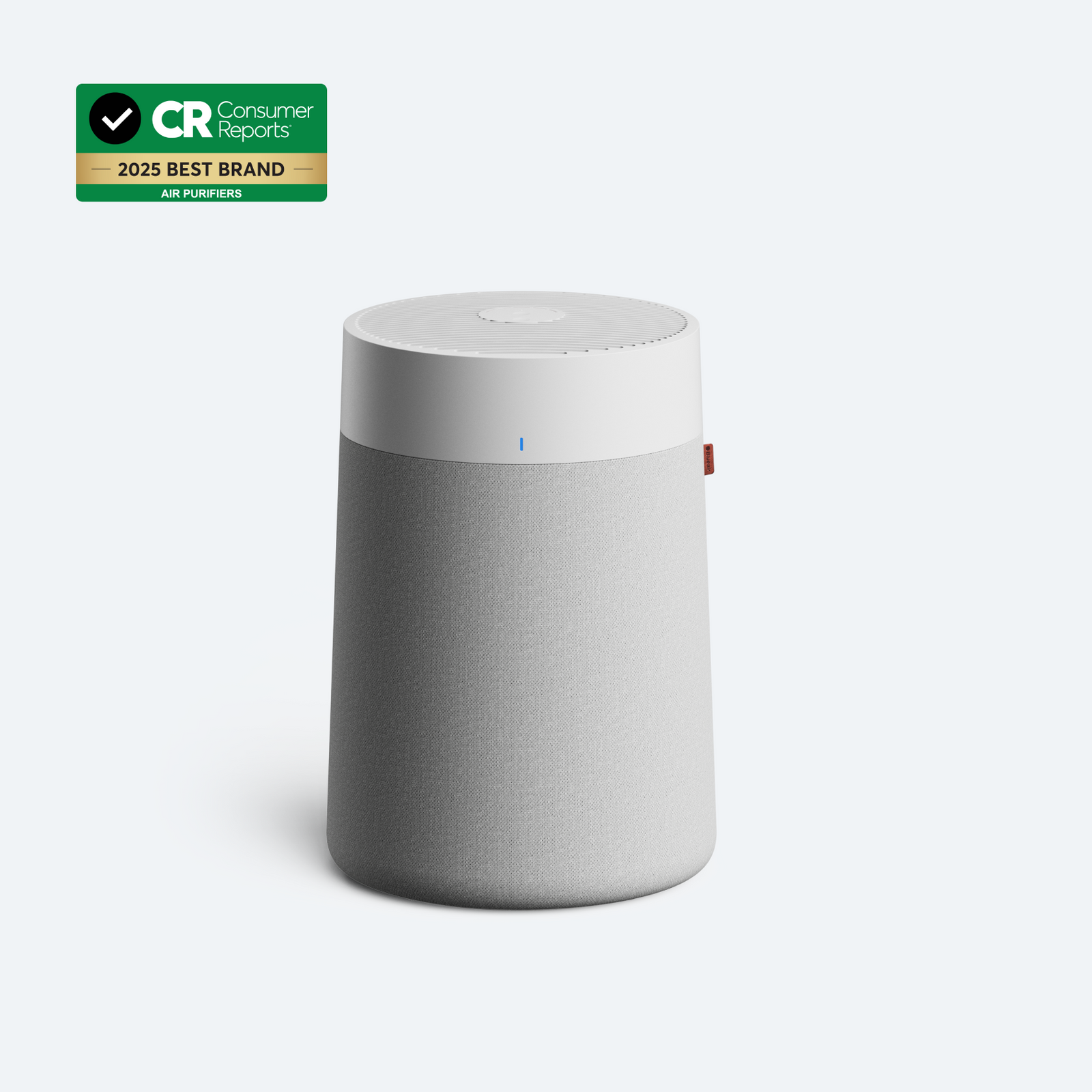
Blueair Blue Pure 311i Max
Why it leads: The 311i Max has the strongest balance of useful airflow, measured noise, controls, and manageable size in this group. Blueair publishes smoke, dust, and pollen CADRs of 283, 314, and 365 CFM; GearLab measured 28 to 48 dB, calculated an ideal 444-square-foot room, and ranked it first in its current 12-model comparison.
Choose it if: You need one purifier for a bedroom, office, or medium living room and value auto mode, schedules, and a washable fabric prefilter.
Skip it if: You do not want electrostatic filtration or an app dependency for advanced settings. The HEPASilent system combines mechanical and electrostatic filtration, and the ionization component cannot be disabled separately.
Ownership: Blueair rates the 32-watt unit's filter for up to nine months, but smoke, pollen, and continuous high-speed use can shorten that interval.
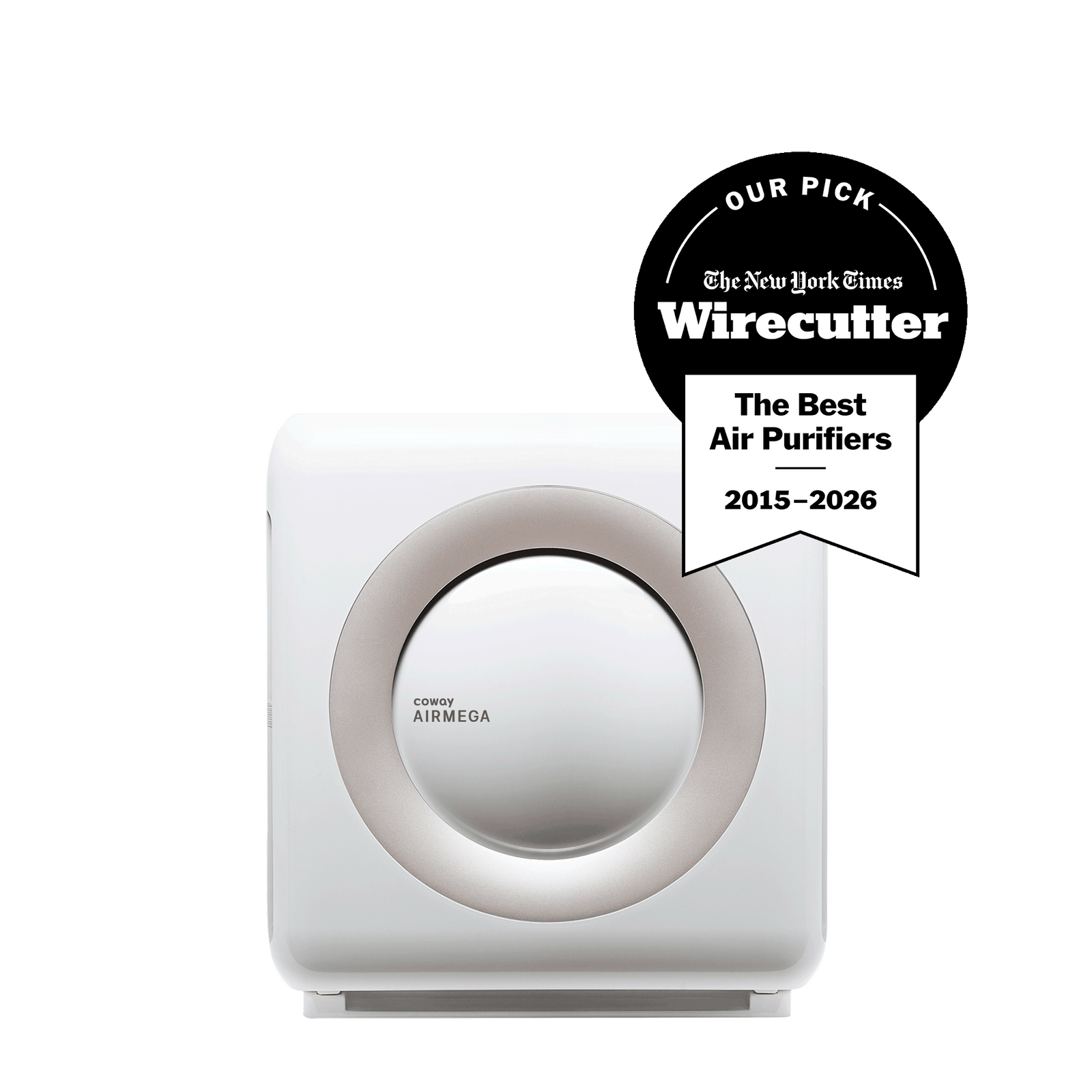
Coway Airmega AP-1512HH Mighty
Why it stands out: The Mighty pairs a published 233 CFM smoke CADR and 361-square-foot rating at 4.8 ACH with physical controls, Auto and Eco modes, a washable prefilter, and established replacement-filter support. GearLab ranked it fourth in its current comparison and measured 33 to 55 dB.
Choose it if: You want a proven medium-room design without Wi-Fi or an app. Its separate deodorization and particle-filter schedules also make maintenance easier to understand.
Skip it if: You need full display blackout, remote control, or lower maximum-speed noise. Coway includes a separately controlled bipolar function; GearLab performed its cited particle test with that function off.
Ownership: Coway specifies six months for the deodorization filter and one year for the main particle filter. Its 77-watt rating is the highest in this five-model group.
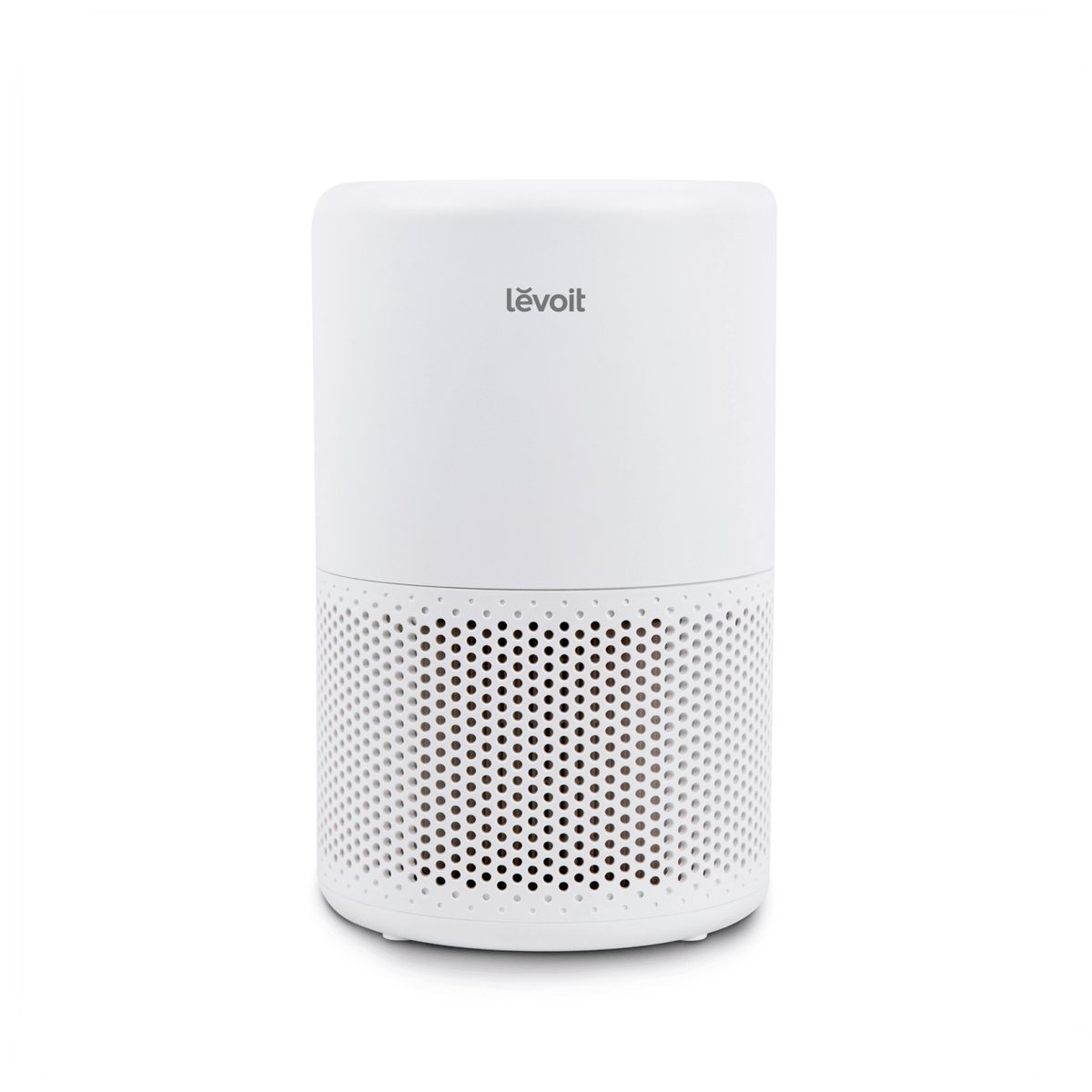
Levoit Core 200S-P
Why it fits: The Core 200S-P is compact and offers schedules, display-off control, a night light, and voice support. Levoit publishes a 90 CFM CADR and 140-square-foot rating at 4.8 ACH; RTINGS measured 91 CFM at maximum but only 50 CFM at its quieter speed 2.
Choose it if: The room is a closed bedroom or office around 140 square feet or less and floor space matters more than maximum airflow.
Skip it if: You need a purifier for a medium room, an open plan, or automatic response to particles. It has no onboard particle sensor or Auto mode.
Ownership: The unit is rated at 37 watts, and Levoit advises checking its combined replacement filter after roughly six to eight months, with earlier replacement under heavier pollution.
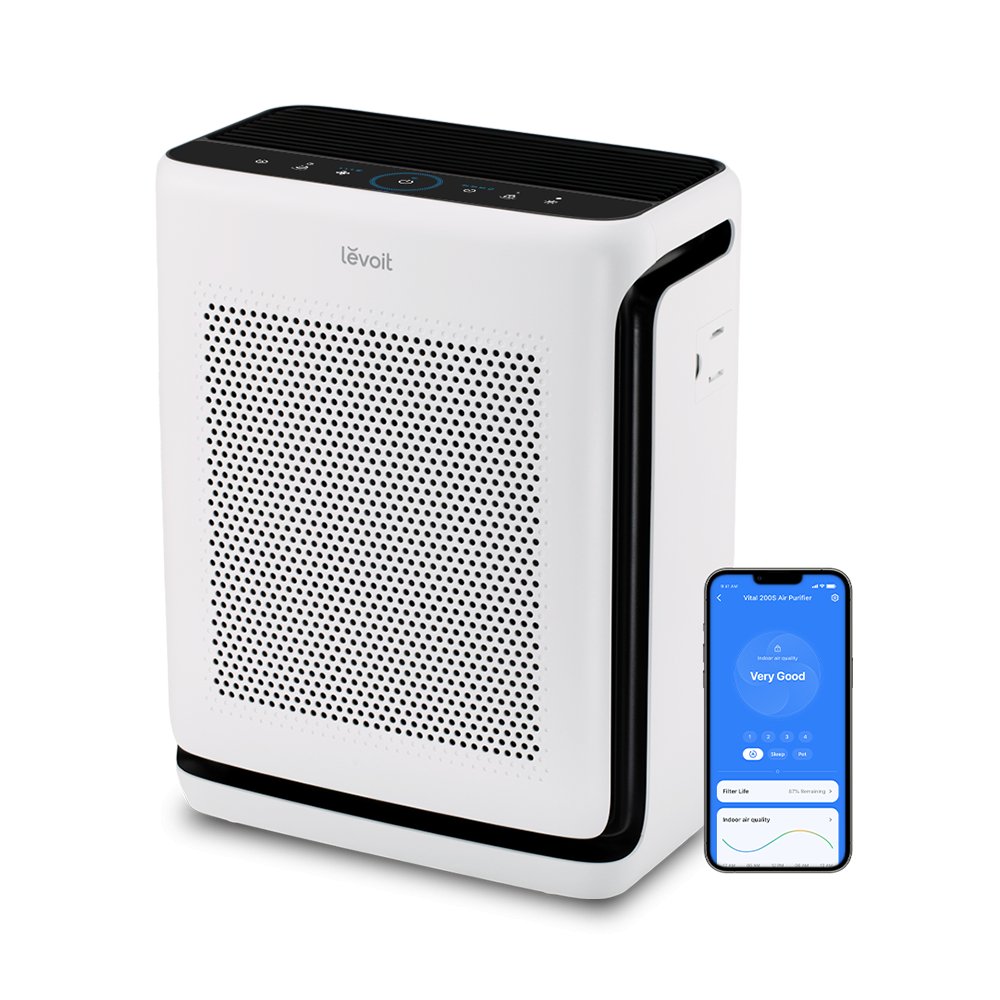
Levoit Vital 200S-P
Why it fits: The Vital 200S-P combines a published 250 CFM CADR with a washable prefilter and U-shaped inlet that make accumulated pet hair easier to reach. RTINGS measured 216 CFM at maximum and 87 CFM at its quieter speed 2 in its current test.
Choose it if: You need medium-room airflow, auto mode, schedules, and practical prefilter access in a shedding-pet home.
Skip it if: Your main problem is litter-box or cooking odor. The carbon layer offers limited support, and the purifier does not replace vacuuming, washing pet bedding, or removing the odor source.
Ownership: The 50-watt unit uses a washable prefilter and a combined main filter. Levoit states a six-to-twelve-month replacement range, while heavy hair or smoke may require earlier service.
Blueair Blue Pure 211i Max
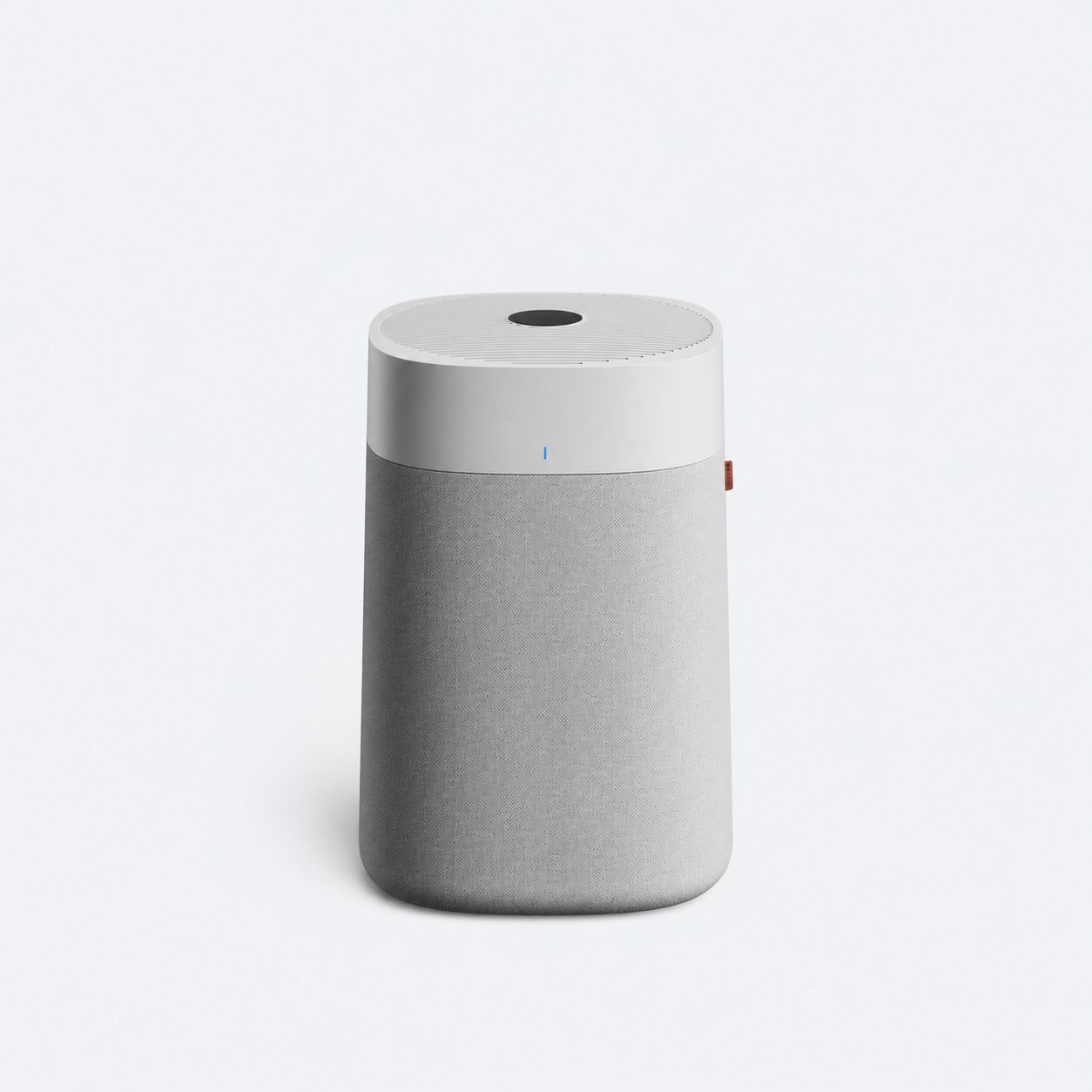
Why it fits: The 211i Max has the most airflow in this group. Blueair publishes a 435 CFM smoke CADR and 674-square-foot rating at 4.8 ACH; RTINGS measured 419 CFM at maximum and 224 CFM at its quieter speed 2.
Choose it if: You need high particle-removal capacity for a large living room, open plan, or seasonal wildfire smoke.
Skip it if: The room is small, floor space is tight, or you want mechanical-only filtration. The 16.2-pound body has no wheels, and its HEPASilent ionization cannot be disabled separately.
Ownership: The purifier is rated at 46 watts and Blueair rates the combined filter for up to nine months. Its larger proprietary filter makes replacement cost more important to check before purchase.
Independent evidence and ownership compared
| Model | Published airflow | Independent airflow | Measured noise | Rated power | Main-filter interval |
|---|---|---|---|---|---|
| Blueair 311i Max | 283 CFM smoke CADR | 444 sq. ft. ideal coverage, GearLab | 28-48 dB, GearLab | 32 W | Up to 9 months |
| Coway Mighty | 233 CFM smoke CADR | Above-average particle removal, GearLab | 33-55 dB, GearLab | 77 W | Carbon 6 months; particle filter 1 year |
| Levoit Core 200S-P | 90 CFM CADR | 91 CFM max; 50 CFM at quieter speed, RTINGS | 33.6-54.7 dBA, RTINGS | 37 W | About 6-8 months |
| Levoit Vital 200S-P | 250 CFM CADR | 216 CFM max; 87 CFM at quieter speed, RTINGS | 32.7-55.6 dBA, RTINGS | 50 W | About 6-12 months |
| Blueair 211i Max | 435 CFM smoke CADR | 419 CFM max; 224 CFM at quieter speed, RTINGS | 33.9-58.7 dBA, RTINGS | 46 W | Up to 9 months |
Measurement methods differ by source, so use independent figures to understand each model's real operating range rather than as a single laboratory ranking. Filter intervals are manufacturer guidance and can shorten with smoke, pollen, or pet hair.
What else we considered
Levoit Core 300S-P: Its published 141 CFM airflow makes it a stronger fit than the Core 200S-P for a typical bedroom, but the smaller model retains a distinct role for tight, closed rooms. See the bedroom guide for that size decision.
Blueair Blue Pure 411i Max: Its published 145 CFM smoke CADR suits smaller rooms, but it overlaps the compact Levoit role without matching the 311i Max's medium-room capacity.
Coway Airmega 400S: Its published 328 CFM smoke CADR and dual-filter design are credible for larger rooms, but the larger body and two-filter replacement pattern are harder to justify against the higher-airflow 211i Max for this guide's large-room slot.
Corsi-Rosenthal box: A properly built box-fan purifier can be a useful emergency smoke option, but performance, electrical safety, noise, and sealing vary with the fan, filters, and assembly. We did not rank a variable DIY build as a like-for-like retail product.
How to choose the right air purifier
Start with smoke CADR and real room size
CADR combines particle-removal efficiency with airflow. EPA's general sizing table starts at 65 CFM for a 100-square-foot room and rises to 390 CFM for 600 square feet, assuming an eight-foot ceiling. For a higher ceiling, an open plan, or heavy smoke, choose more capacity. A large one-ACH marketing number is not equivalent to frequent whole-room cleaning.
| Room area | EPA baseline minimum CADR | Practical direction |
|---|---|---|
| 100 sq. ft. | 65 CFM | A compact purifier can work if the door stays closed |
| 200 sq. ft. | 130 CFM | Choose a model rated at least 130 CFM |
| 300 sq. ft. | 195 CFM | Coway Mighty or Vital 200S-P class |
| 400 sq. ft. | 260 CFM | Blueair 311i Max class |
| 600 sq. ft. | 390 CFM | Blueair 211i Max class |
Separate particles from odors and gases
HEPA-grade and other high-efficiency particle filters can reduce airborne pollen, dust, dander, and smoke particles. Odors and gases are different. EPA says activated carbon can help when the filter contains a large amount of material, and there is no broadly used CADR-like rating for gas removal. Treat thin carbon sheets as limited odor support, not a replacement for ventilation or source control.
Buy enough airflow at a tolerable speed
Published CADR is normally measured on the highest fan setting. That setting may be too loud for sleep or work. A useful strategy is to oversize moderately, run the purifier higher before occupying the room, then use a quieter middle setting. For dedicated sleep use, compare our bedroom air purifier picks.
Check the filter before buying the machine
Look up the official replacement filter, current availability, stated service interval, and whether the prefilter is washable. Do not assume every filter carrying the right shape has equivalent media or sealing. Heavy pet hair, pollen, and wildfire smoke can shorten service life, so inspect the filter instead of relying only on an app timer.
Choose by the problem you need to solve
| Use case | Prioritize | Do not overvalue | Dedicated guide |
|---|---|---|---|
| Allergies | Correct CADR, sealed particle filtration, tolerable continuous speed | Medical-sounding claims without clinical evidence | Best air purifiers for allergies |
| Bedroom | Quiet useful speed, lights-off control, correct closed-room CADR | Huge one-ACH coverage claims | Best bedroom air purifiers |
| Wildfire smoke | High smoke CADR, spare filters, low-ozone design, continuous operation | App features and styling | Best air purifiers for wildfire smoke |
| Pets | Washable prefilter, strong airflow, accessible intake | Broad odor-removal promises from thin carbon sheets | Best air purifiers for pets |
| Odors and gases | Published carbon mass, source control, safe ventilation | Particle CADR as proof of gas removal | None of our five picks is a dedicated heavy-odor specialist |
| Open plan | Measure the entire connected area and choose high CADR | A rating for one small section of the space | This guide |
What an air purifier cannot fix
An air purifier does not remove mold growing on a wall, solve excess humidity, replace a range hood, or eliminate the need to vacuum pet hair. It filters what reaches the intake. Fix moisture and pollutant sources first, ventilate when outdoor air is safe, and use the purifier as one part of an indoor-air strategy.
These devices are not medical treatments. People with asthma, heart or lung disease, or other health concerns should follow guidance from a qualified healthcare professional and public-health authorities during severe smoke events.
Maintenance and recurring costs
Vacuum or wash only the prefilter when the manufacturer permits it, and let washable parts dry completely before reinstalling them. Do not wash a main HEPA or particle filter unless its manual explicitly says it is washable. Keep an extra filter before wildfire season because local stock can disappear during a smoke event.
Filter cost is volatile, so we do not publish a fixed annual dollar figure without a live price feed. Before buying, check the exact genuine-filter model, current price, service interval, and whether particle and carbon stages are replaced together. The Coway uses separate six-month carbon and one-year particle schedules; the Core 200S-P generally calls for six to eight months; the Vital 200S-P lists six to twelve months; and Blueair rates both Max filters for up to nine months. Those are starting points, not guarantees.
Electricity also changes ownership cost. Rated maximum power ranges from 32 watts for the 311i Max to 77 watts for the Coway Mighty in this group. Actual use depends on fan speed, but a purifier that can deliver useful airflow at a lower, tolerable setting is more likely to stay on long enough to help.
Frequently asked questions
What is the best air purifier for most homes?
The Blueair Blue Pure 311i Max is our research-led overall pick for medium rooms. Its 283 CFM published smoke CADR, 439-square-foot rating at 4.8 air changes per hour, and 28 to 48 dB range measured by GearLab balance useful airflow with manageable noise.
What size air purifier do I need?
Match smoke CADR to the whole room rather than using the largest one-air-change coverage claim. EPA's baseline table uses about 65 CFM per 100 square feet with an 8-foot ceiling; choose more capacity for high ceilings, open plans, or wildfire smoke.
Which air purifier is best for allergies?
For allergies, prioritize enough CADR for the room, continuous operation at a tolerable speed, and a well-sealed particle filter. The Blueair 311i Max is our medium-room pick, while the Coway Mighty is a straightforward alternative with separate particle and deodorization filters.
Do air purifiers remove odors?
Particle filters capture dust, pollen, smoke particles, and pet dander, but gases and odors need substantial activated carbon or another sorbent. None of our five picks is a dedicated heavy-odor specialist, so source control and ventilation still matter.
Which air purifier is best for wildfire smoke?
The Blueair Blue Pure 211i Max is our large-room smoke pick because Blueair publishes a 435 CFM smoke CADR and RTINGS measured 419 CFM at maximum. Close windows and doors when outdoor smoke is high and keep a spare filter available.
How long should I run an air purifier each day?
Continuous operation is usually more effective than short sessions because particles keep entering and resuspending. Use the highest speed you can tolerate, then reduce it for sleep or calls rather than switching the purifier off for long periods.
Where should an air purifier be placed?
Place it in the room where you spend the most time, with clear space around the intake and outlet. Avoid hiding it behind furniture or in a corner that blocks airflow, and keep doors and windows closed during wildfire-smoke events.
How often should air purifier filters be replaced?
Follow the manufacturer schedule and inspect the filter during heavy pollen, pet, or smoke use. The models in this guide generally call for main-filter replacement every six to twelve months, while washable prefilters need more frequent cleaning.