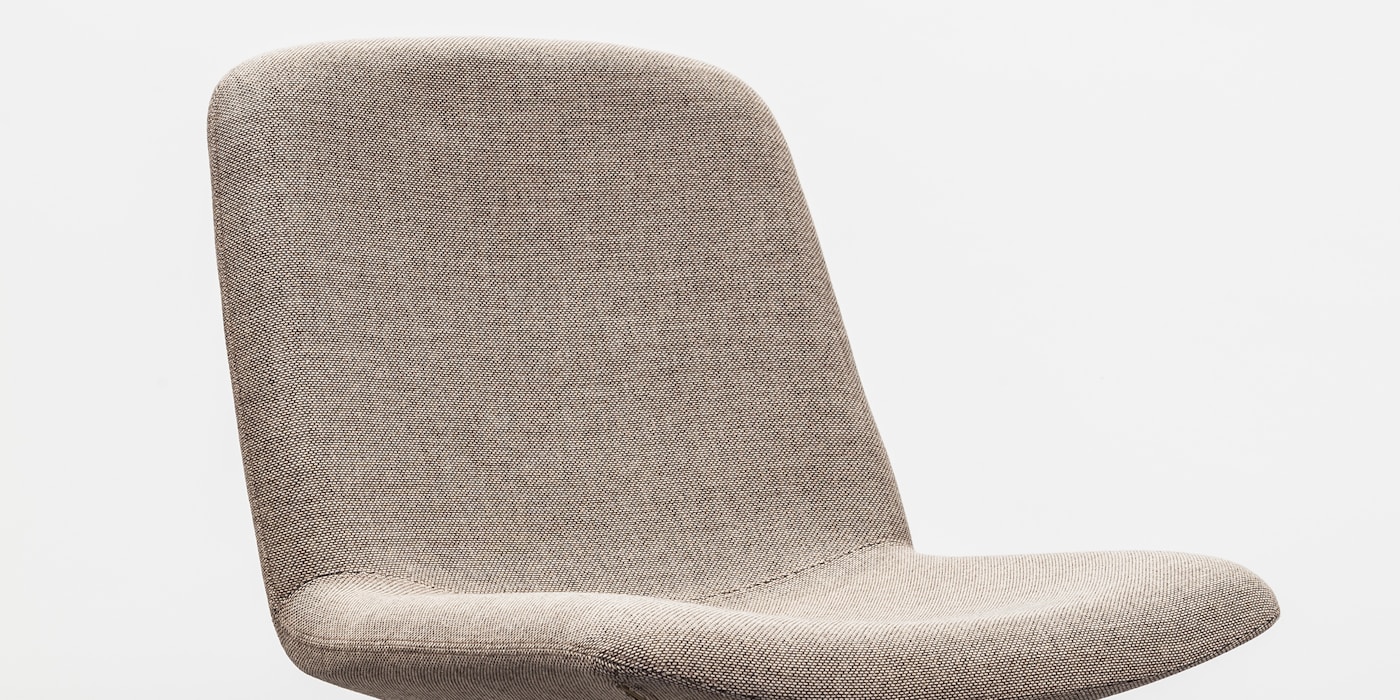
The Branch Ergonomic Chair Pro is our research-led pick for most US buyers shopping below $500. It offers more fit control than most chairs in this tier: seat-height and seat-depth adjustment, two-way lumbar support, 5D armrests, forward tilt, recline control, and an optional tall cylinder. If you prefer a simpler commercial task chair, the HON Ignition 2.0 is the stronger alternative. The Staples Dexley is the budget choice when it is discounted below $200.
If you are not working with a hard price ceiling, compare our broader 10 best ergonomic office chairs of 2026. It adds premium mesh, dynamic-back, multi-device, and long-warranty options without changing this page's under-$500 focus.
There is no universal most-comfortable chair. Seat depth that suits a 6-foot user can press behind a shorter user's knees, and strong lumbar support can feel either useful or intrusive depending on torso length. This guide therefore ranks chairs by fit options, documented specifications, warranty, return risk, current US availability, and independently reported tradeoffs - not by an invented comfort score.
Our picks at a glance
| Pick | Best for | Seat design | Useful fit controls | Warranty | Main tradeoff |
|---|---|---|---|---|---|
| Branch Ergonomic Chair Pro | Best overall under $500 | Cushioned seat; several upholstery options | Seat depth, 5D arms, two-way lumbar, forward tilt | 7 years | Sits at the budget ceiling; direct returns carry a chair fee |
| HON Ignition 2.0 | Commercial-style durability | Mesh back and contoured cushion on the common task version | Seat depth, lumbar height, arm height and width, recline | Varies by SKU and use | Many configurations look similar but include different controls |
| SIHOO Doro C300 | Breathable full-mesh support | Mesh seat and back | Adaptive lumbar, 4D arms, backrest height, recline | 3 years | Lumbar position is not manually adjustable; seat is relatively narrow |
| Steelcase Series 1 | Compact design and long warranty | Cushioned seat; flexible mesh-style back options | Seat depth, arm and lumbar options, recline tension | 12 years on the current US store version | Some configurations exceed $500; not the plushest all-day seat |
| Staples Dexley | Best budget pick | Mesh seat and back | Seat height, arm height, headrest, lumbar, tilt lock | 5 years | No seat-depth adjustment; deep seat can be a poor short-user fit |
The best office chairs under $500
Branch Ergonomic Chair Pro
Current official specsSeven-year warrantyIndependent roundup consensusThe Ergonomic Chair Pro makes the strongest case at the top of this budget. Branch lists 14 adjustment points, including seat height and depth, a two-way removable lumbar pad, 5D arms, forward tilt, recline tension, and an optional extended cylinder. The standard chair supports up to 275 pounds and comes with a seven-year parts-and-components warranty.
Those controls are useful because they address the reasons a chair does not fit: the seat edge is too far forward, the lumbar pad lands in the wrong place, or the arms force the shoulders up. The optional tall cylinder extends the height range, though larger users should still compare the 25-inch overall width and 275-pound capacity with their needs.
Main tradeoff: it is priced at the $500 ceiling before tax and optional accessories. Branch's direct return policy allows like-new returns within 30 days but deducts a chair return fee, so keep the box until you are sure.
Best fit: buyers who want the widest useful adjustment set without moving into four-figure chairs.
Skip it when: you need more than a 275-pound capacity or want a low-risk free-return trial.
HON Ignition 2.0
Current HON lineIndependent hands-on reviewThe Ignition 2.0 is the practical choice for buyers who prefer a conventional padded seat and breathable mesh back. The commonly sold task version includes adjustable lumbar height, a seat slider, synchro-tilt, tilt tension, and arms that adjust in height and width. That combination accommodates more leg lengths and desk widths than a chair with fixed arms and a fixed seat pan.
The important warning is configuration. HON sells the Ignition family with different backs, seats, arms, controls, and weight ratings. A retailer photo is not enough: verify that the exact SKU includes the seat slider, adjustable lumbar, and arm type you expect. HON lists full lifetime coverage on some current task-chair SKUs, but warranty length and exclusions depend on model and use.
Main tradeoff: the all-black retail version is functional rather than luxurious, and adding options can move the price over $500. Independent testing by Tom's Guide found the lumbar useful but wished it adjusted higher.
Best fit: a full-time home office that prioritizes proven task-chair controls and serviceable commercial construction.
Skip it when: you want a full-mesh seat or cannot confirm the exact retail configuration.
SIHOO Doro C300
Current official specsMultiple hands-on reviewsThe Doro C300 is the airflow-first option. SIHOO lists a mesh seat and back, self-adaptive lumbar support, a height-adjustable backrest, coordinated 4D arms, several recline positions, a 330-pound maximum load, and a three-year warranty. It offers more moving parts than the Dexley while usually leaving more budget headroom than the Branch Pro.
Its lumbar system follows the back as you move rather than letting you manually set height and depth. That simplicity can work well when it lands in the right place, but it gives you less correction when it does not. SIHOO lists a seat depth of about 17.1 to 18.1 inches and a maximum hip width of about 20.3 inches. Tom's Guide also found the seat relatively narrow and cautioned taller or wider users.
Main tradeoff: fit is more polarizing than the adjustment count suggests. Buy it only from a seller whose return process you are willing to use.
Best fit: average-size users in warm rooms who prefer a firm, breathable mesh seat.
Skip it when: you need a wide seat or want to position the lumbar support manually.
Steelcase Series 1
Current official specsIndependent hands-on reviewThe Series 1 is the entry point to Steelcase's US chair line. Current configurations offer either a 3D Microknit back or an Air Back, plus choices for 4D or height-adjustable arms and fixed or adjustable lumbar support. Steelcase currently lists support up to 400 pounds and a 12-year multi-shift parts-and-labor warranty on the US store version.
The chair's compact frame and established parts support are the reasons to choose it, not luxury cushioning. An independent GearLab review found it durable and easy to assemble but less comfortable than top premium chairs for people seated 40-plus hours per week. That makes it a better fit for compact offices and moderate-to-long use than for buyers chasing a plush executive feel.
Main tradeoff: configuration changes matter, and upgraded upholstery or arms can push the final price above $500. A high weight rating also does not guarantee a wide or deep fit.
Best fit: buyers who value a long warranty, compact footprint, and established manufacturer support.
Skip it when: the configuration you need exceeds the cap or you want the deeper comfort range of a Leap or Gesture.
Staples Dexley
Current Staples listingFive-year warrantyIndependent budget recommendationThe Dexley is the sensible low-cost choice when the sale price is below $200. Staples lists a full-mesh seat and back, adjustable seat height, arm height, headrest angle and height, lumbar support, tilt tension, a three-position tilt lock, a 275-pound rating, ANSI/BIFMA compliance, and a five-year limited warranty.
The compromises are measurable. The 18.35-inch-deep seat does not slide, so shorter users may not be able to leave comfortable space behind the knees. Arm adjustment is also basic compared with the Branch, HON, or SIHOO. WIRED now recommends the Dexley as its budget chair and notes that the smaller Staples Hyken may suit shorter people better.
Main tradeoff: less fit control and rougher mesh than the midrange picks. The upside is that many US buyers can try it through a Staples store and return it without shipping a large chair across the country.
Best fit: average-to-taller users who need a breathable chair at the lowest practical budget.
Skip it when: you are shorter, dislike a firm mesh seat, or need adjustable seat depth.
Which chair should you buy?
| Your priority | Start with | Why |
|---|---|---|
| Maximum useful adjustment below $500 | Branch Ergonomic Chair Pro | Seat depth, two-way lumbar, 5D arms, forward tilt, and optional tall cylinder |
| Conventional padded task-chair feel | HON Ignition 2.0 | Contoured cushion, mesh back, seat slider, and a mature commercial product line |
| Hot room or preference for full mesh | SIHOO Doro C300 | Mesh seat and back with adaptive support, at a lower price than premium mesh chairs |
| Compact footprint and long warranty | Steelcase Series 1 | Established parts support and a current 12-year US store warranty |
| Spend as little as practical | Staples Dexley | Useful basic controls, full mesh, local store availability, and a five-year warranty |
Fit the chair before comparing features
Start with seat height. Your feet should rest flat on the floor or a footrest without the seat edge lifting your thighs. Next check seat depth: sit fully against the backrest and look for a small gap between the seat edge and the back of your knees. A high weight rating does not solve a seat that is too deep, too narrow, or too short.
Then check armrests against the actual desk. They should support relaxed shoulders while letting you move close enough to the keyboard. Width adjustment matters for broader or narrower frames; depth and pivot matter when switching between typing, a mouse, and a phone. Finally, set lumbar support so it follows the lower back without pushing the pelvis forward.
Ergonomic limit: a chair supports a working position; it does not make prolonged sitting healthy. OSHA recommends neutral support and frequent position changes, while NIOSH recommends movement breaks and varying posture. Persistent or severe pain is a medical question, not a product-comparison problem.
What different office-chair budgets buy
| Budget | What is realistic | Common compromise | Best strategy |
|---|---|---|---|
| Under $200 | Basic height, tilt, arm, and lumbar controls | Fixed seat depth, rougher mesh, shorter warranty, fewer replacement parts | Try locally and prioritize returnability |
| $200 to $350 | Better mesh, more arm movement, adaptive lumbar on selected models | Shorter warranties and less proven long-term parts support | Compare fit dimensions, not the number of advertised features |
| $350 to $500 | Seat sliders, better recline, stronger warranties, commercial-brand options | Premium options can push the final configuration over budget | Spend for the adjustment your body actually needs |
| Refurbished premium | Potential access to Leap, Amia, Aeron, or Zody mechanisms | Unknown wear, replaced parts, non-transferable original warranties | Buy only with documented refurbishment and returns |
Mesh seat or padded seat?
Choose full mesh if airflow is the priority and you are comfortable with a firmer, tensioned surface. Mesh quality matters: loose mesh can sag, while an exposed frame can create pressure at the thighs. The SIHOO C300 and Dexley put mesh under the body as well as behind it, so the return policy matters more than a photograph.
Choose a padded seat if you prefer a more familiar task-chair feel. The Branch Pro, HON Ignition 2.0, and Steelcase Series 1 use cushions on common configurations, but foam density, contour, and seat depth determine whether that cushion still feels supportive after several hours. Softness in the first five minutes is not the same as long-session fit.
Treat the return policy as a chair feature
Comfort is personal and large-item returns can be expensive. Before buying, record the return window, return-shipping charge, restocking fee, disassembly requirement, and whether the original box is mandatory. Marketplace sellers may use different terms from the manufacturer, and a manufacturer's warranty may not apply to an unauthorized seller.
Keep every insert and fastener until you have completed several real work sessions. Test typing, mouse use, calls, recline, and moving under the desk. If the seat edge creates pressure or the lumbar support cannot be moved away from an uncomfortable spot, another week is unlikely to change the geometry.
New midrange or refurbished premium?
A refurbished Steelcase Leap or Amia, Herman Miller Aeron, or Haworth Zody can offer more adjustment and repair support than a new $400 chair. It can also arrive with a tired cylinder, compressed foam, worn arm pads, mismatched replacement parts, or no manufacturer warranty.
Ask the seller which parts were replaced, whether the cylinder and casters are new, who made the replacement seat pad, what cosmetic grade means, and who pays return freight. For an Aeron, confirm the size. For any chair, test every control and check for side-to-side wobble. A vague \"refurbished\" label is not evidence of rebuilding.
Other chairs we considered
The standard Branch Ergonomic Chair remains a sensible lower-cost alternative if you do not need the Pro model's forward tilt, 5D arms, or two-way lumbar pad. The Staples Hyken is worth trying if the Dexley feels too deep, especially for shorter users. The FlexiSpot C7 and Autonomous ErgoChair Pro appear frequently in sub-$500 results, but changing configurations, warranty differences, and more mixed long-term feedback kept them outside this five-chair shortlist.
Set up the chair in the right order
- Set seat height so the feet are supported and the knees are roughly level with or slightly below the hips.
- Adjust seat depth so the backrest supports you without the seat edge pressing behind the knees.
- Move the chair close to the desk, then set arm height and width with the shoulders relaxed.
- Position lumbar support at the inward curve of the lower back; reduce it if it pushes you forward.
- Set recline tension so leaning back feels supported rather than locked or spring-loaded.
- Move the keyboard and monitor to the chair instead of contorting the chair around a poor desk setup.
Frequently asked questions
What is the best office chair under $500?
The Branch Ergonomic Chair Pro is our research-led pick for most US buyers when its current pre-tax price is $500 or less. It combines seat-depth adjustment, two-way lumbar support, highly adjustable arms, forward tilt, an optional tall cylinder, and a seven-year warranty.
Is $500 enough for a good ergonomic office chair?
Yes. A $300 to $500 budget can buy useful seat-depth, lumbar, armrest, and recline adjustments plus a meaningful warranty. It usually will not buy the materials, parts support, or broad fit range of a premium $1,000 chair, so fit and return terms still matter.
What is the best office chair under $200?
The Staples Dexley is our budget pick when it is available below $200. It has a full-mesh seat and back, adjustable arm height, lumbar support, a headrest, and a five-year warranty, but it lacks seat-depth adjustment and its deep seat is not ideal for every shorter user.
Are mesh office chairs better than padded chairs?
Mesh is usually cooler and can distribute pressure well when tension is properly designed. A padded seat can feel less firm and may suit people who dislike mesh edges. Neither material is automatically better; fit, seat shape, foam or mesh quality, and returnability matter more.
Can an ergonomic office chair fix back pain?
No chair can diagnose or treat back pain. A well-fitted chair can support a neutral working position, but OSHA and NIOSH also recommend changing position and taking movement breaks. Persistent or severe pain needs advice from a qualified medical professional.
Should I buy a new midrange chair or a refurbished premium chair?
Choose new when you want predictable warranty coverage, clean components, and straightforward returns. A professionally refurbished Steelcase Leap or Herman Miller Aeron can offer more adjustment, but only when the seller states which parts were replaced and provides a real warranty and return policy.
How we researched this guide
We reviewed ten core US ranking pages in depth and sampled additional results for \"best office chair,\" \"best office chair under $500,\" \"best ergonomic office chair,\" and \"best budget office chair.\" Large testing publications informed recurring use cases and independent tradeoffs; specialist pages helped identify sub-$500 search intent. We did not copy another site's order, star ratings, measurements, or first-person claims.
Each finalist needed current US availability, official specifications, a stated warranty, a distinct use case, and independent evidence beyond a retailer description. Ranking factors were fit range, practical adjustments, warranty and repair confidence, return risk, materials, and value within the $500 pre-tax cap. Commission rate and temporary discount percentage were excluded.
Primary product sources
- Branch Ergonomic Chair Pro specifications and Branch return policy
- HON Ignition product line and current SKU warranty information
- SIHOO Doro C300 specifications
- Steelcase Series 1 specifications and warranty
- Staples Dexley specifications and warranty
 Best Ergonomic Office Chairs
 Best Noise-Cancelling Headphones
 Best Coffee Makers